
Mining’s Hidden Workforce Risk Is Not Just Hiring. It’s Experience Loss.
March 25, 2026
When to start taking CPP/QPP and OAS Benefits
June 3, 2026
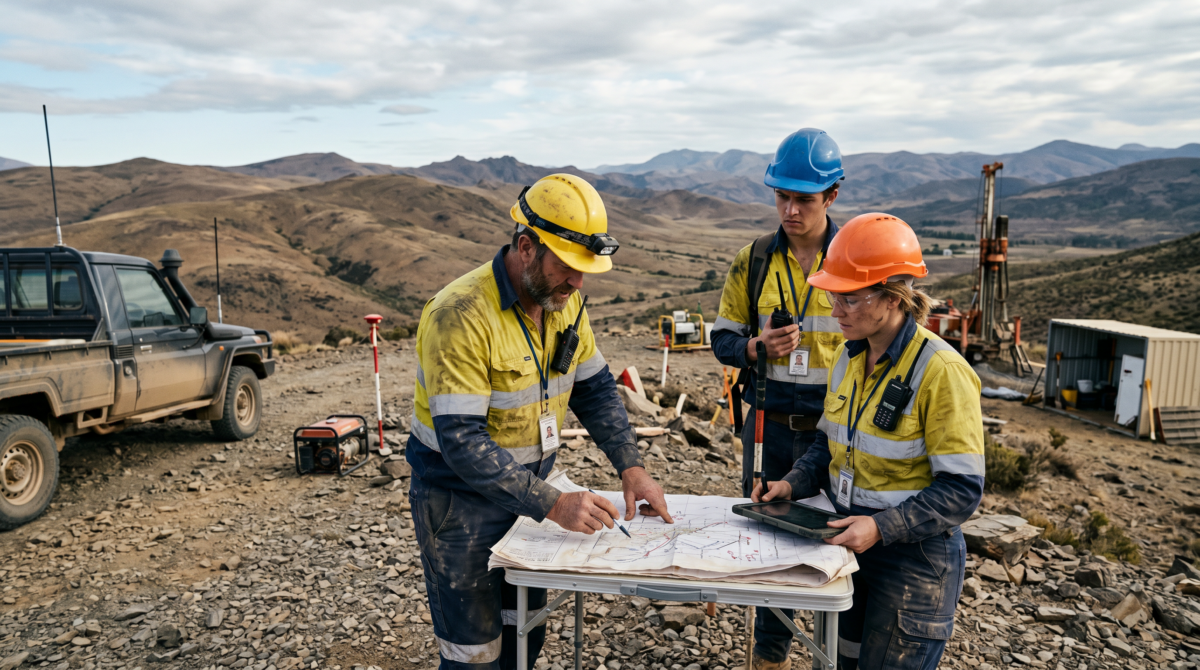
Benefits built for scale do not always work for companies still building.
Junior mining companies operate under very different pressures than senior producers. Smaller teams, leaner budgets, remote workforces, tighter financing windows, and rapid shifts from exploration to development all create a different kind of people risk.
Yet many still rely on employee benefits structures borrowed from larger, more established operators, and that usually creates a mismatch.
The issue is not whether a plan looks competitive on paper, the issue is whether it fits the realities of an early-stage mining business.
Early-stage mining runs on a smaller group of people
In a junior mining company, a small number of people often carry a disproportionate amount of responsibility.
Leadership teams are lean, administrative capacity is limited, and technical expertise is held by only a few individuals. In many cases, key work is contracted out, while the internal team is responsible for keeping the project moving, managing risk and maintaining investor confidence.
That means every hire matters more, every departure hurts more and every gap in support becomes more visible. A senior producer may be able to absorb those pressures across a larger structure. A junior miner usually cannot.
The operating model is different, so the support model has to be different too
Junior miners are not simply smaller versions of larger producers.
They often move through exploration, feasibility, permitting, and development with limited internal infrastructure and high uncertainty. Team size, contractor mix, and workforce needs can shift quickly from one phase to the next.
That creates a very different set of pressures, including:
- Smaller teams with less redundancy
- Greater dependence on key leaders and specialists
- More contractor coordination
- Tighter control over spending
- More pressure to attract talent without the brand recognition of a larger operator
A standard benefits plan may check the box administratively. It may not solve the realities of the business.
Benefits built for scale do not always work for companies still building
Senior producers typically have more stable structures, broader internal resources and more established systems for supporting large workforces across multiple sites.
Junior mining companies are still building that foundation. What they need is not necessarily more benefits — they need more functional benefits.
That can mean:
- Access to care that works in remote or rotational environments
- Support that is credible for a small but critical leadership team
- Mental health resources that are practical, timely, and usable
- Programs that can scale as the company moves from one stage to the next
- Communication that employees can actually understand and use
For junior miners, value comes from alignment, not volume.
In junior mining, people risk becomes execution risk faster
When a senior producer experiences turnover, the impact may be significant. When a junior mining company experiences turnover, the impact can be immediate.
A delayed hire can slow momentum, a burned-out leader can bottleneck decision-making, and a benefits program that looks fine on paper but fails in practice can weaken retention at the exact moment a company needs stability.
In early-stage mining, those disruptions do not stay contained within HR. They show up in operations, timelines, and leadership strain.
This is especially true when companies are competing for skilled talent against larger employers with stronger brand recognition, more predictable infrastructure, and deeper resources.
A stronger approach reflects the stage of the business
One of the biggest mistakes junior mining companies can make is assuming they should mirror what larger producers already offer.
The better question is: what does this company need right now, given its stage, workforce model, location and leadership structure? That answer will usually be different.
A strong strategy for a junior mining company should account for:
- The realities of a lean internal team
- The pressure placed on founders, executives, and key operators
- Remote access issues and rotational work patterns
- The need to attract talent without overbuilding costs
- The ability to evolve as the mine progresses
This is not about having a richer plan, it is about having a smarter one.
The bottom line
Junior mining companies do not need a scaled-down version of what senior producers offer. They need a benefits strategy tailored to their operating reality.
Because in early-stage mining, the wrong plan does more than miss the mark. It can create friction in hiring, strain on leaders, and instability at the exact stage where execution matters most.
Pelorus helps mining companies design benefits strategies that reflect how their business actually operates — not how a larger company does.